Did you know that every item in your home, from the rug to the paint, affects the planet? We often forget how our decor choices harm the environment. Yet, these small decisions have a big impact.
Making a home that’s both beautiful and eco-friendly is easier than you think. Sustainable interior design is about more than just looks. It’s about the ethical making and life cycle of every item we use.
By choosing green home design, we can reduce our carbon footprint. We can still have stylish and cozy homes. Eco-conscious interior design lets us create a space that shows our values. It doesn’t mean we have to give up on quality.
Key Takeaways
- Every decor choice impacts the global environment.
- Focus on the lifecycle and ethical production of home goods.
- Reduce your carbon footprint through mindful material selection.
- Balance aesthetic appeal with long-term environmental responsibility.
- Small changes in your living space lead to significant ecological benefits.
Understanding Sustainable Interior Design
When we design our homes, we can help the planet. Choosing environmentally conscious interiors is key. It’s not just a trend; it’s a must for our living spaces.
By looking at the life of every item in our homes, we can lessen our impact on the planet. This approach is crucial for a greener future.
What Is Sustainable Interior Design?
This practice is about the whole life of our home goods. It looks at everything from raw material extraction to disposal. It’s like sustainable architecture, making our homes efficient and healthy for years.
Choosing items that are ethically sourced helps animals and people. We seek products that waste less and last longer. This way, we create homes that reflect our values and look great.
Benefits of Sustainable Interior Practices
These practices are good for us and the planet. Choosing quality saves resources and cuts pollution. Supporting fair labor means our comfort doesn’t hurt others.
The table below shows the big differences between old design and sustainable design:
| Feature | Traditional Design | Sustainable Design |
|---|---|---|
| Material Sourcing | Non-renewable, high impact | Renewable, low impact |
| Product Lifespan | Short, disposable | Long, durable |
| Labor Standards | Often opaque | Transparent, fair |
| Environmental Goal | Aesthetics only | Efficiency and health |
Using sustainable architecture in our homes makes them healthier. We cut down on toxic chemicals and improve air by choosing natural materials. These environmentally conscious interiors offer a peaceful space that’s good for us and the planet.
Choosing Eco-Friendly Materials
Choosing the right materials is key to eco-conscious interior design. Our home choices affect our health and the planet. Using sustainable materials makes our homes beautiful and healthier for our families.
Many household items, like synthetic rugs, can be harmful. They shed microplastics when cleaned, harming our waterways and ecosystems.
Sustainable Flooring Options
Flooring is a big part of our homes, making it crucial for eco-friendly decor. We should pick materials that are durable and eco-friendly. Bamboo, cork, and reclaimed wood are great choices for a greener home.
Bamboo grows fast and regenerates quickly. Cork comes from tree bark without harming the trees. Reclaimed wood adds character and prevents waste. These options are warm, natural, and durable.
| Material | Sustainability Level | Durability |
|---|---|---|
| Bamboo | High | Excellent |
| Cork | High | Good |
| Reclaimed Wood | Very High | Excellent |
Eco-Conscious Paint Choices
Many paints have VOCs, releasing harmful gases. Switching to eco-friendly decor means avoiding these chemicals. Choose low-VOC or zero-VOC paints for better air quality.
Natural paints, made from plants, clay, or milk, are safer. They are biodegradable and free from toxins. Making these changes improves our homes and the environment.
Energy Efficiency in Design
Modern sustainable architecture focuses on energy efficiency. By choosing how we light and power our homes, we can cut down our environmental impact. These choices are good for the planet and save us money on utility bills over time.
Incorporating Natural Light
Using natural light is a key way to make homes more energy-efficient. We suggest using light-reflecting surfaces to brighten rooms without needing electricity during the day.
Here are some tips to increase natural light:
- Paint walls in soft white or light green tones to reflect sunlight.
- Place mirrors opposite windows to enhance natural light.
- Choose sheer window treatments for light while keeping privacy.
“The most sustainable energy is the energy we do not use. By harnessing the sun, we create spaces that feel alive and vibrant.”
Energy-Efficient Appliances
Appliances also play a big role in green home design. Today’s technology lets us enjoy a high standard of living with less power than older models.
When updating your home, choose appliances with strict environmental certifications. These are made to perform well while wasting less, key for sustainable architecture.
By focusing on efficiency, your home stays cozy all year. Smart design and high-performance gear make a home that’s both stunning and eco-friendly.
Sustainable Furniture Selection
Choosing sustainable furniture is a big step to reduce your home’s environmental impact. Today’s market often focuses on cheap, fast furniture. This leads to a lot of waste, with millions of items ending up in landfills every year.
By choosing environmentally conscious interiors, we can change this. Investing in durable items is a way to care for our planet. It means we use fewer new materials and cut down on carbon emissions.
Opting for Reclaimed Wood
Using reclaimed wood is a smart way to decorate your home. It gives old timber a new life, saved from old barns or factories. This choice helps save trees and adds a unique character to your space.
Reclaimed wood furniture tells a story that new items can’t match. Its texture and grain bring warmth to your home. It’s a way to make your space both historic and eco-friendly.
Choosing Durable, Long-lasting Pieces
The way furniture is made is just as important as the materials. We suggest picking high-quality craftsmanship over trendy looks. A well-made piece can last for decades, becoming a family treasure.
When looking for sustainable furniture, look for solid construction and strong materials. Timeless designs keep your home stylish, even as trends change. Choosing durable furniture helps our economy be more circular and responsible.
Utilizing Plant Life in Design
We can turn our homes into lively sanctuaries by adding greenery. This move is key in today’s green design trends. It focuses on beauty and health. The right plants can clean the air and make our homes peaceful.
Air-Purifying Houseplants
Choosing the right plants is crucial for a healthy home. Buy your plants from local nurseries or farmers’ markets. This helps reduce the carbon footprint from long-distance transport.
When buying, pick plants that are in season and fit your climate. Plants like the Snake Plant or Spider Plant are great at cleaning the air. Buying local and seasonal means your plants will be healthy and suited to your area.
Creating a Green Wall
For a bold look, consider a vertical garden or green wall. These are like living art, using space well. They also help clean the air and block out noise, following the latest green design trends.
To keep your green wall looking good, use a modular system. This makes watering and changing plants easy. Regular care will keep your wall lush and vibrant for years.
| Plant Name | Air Purification | Light Requirement | Maintenance Level |
|---|---|---|---|
| Snake Plant | High | Low to Bright | Low |
| Spider Plant | Medium | Indirect Light | Low |
| Peace Lily | High | Low to Medium | Moderate |
| Pothos | Medium | Low to Bright | Low |
Minimalism and Decluttering
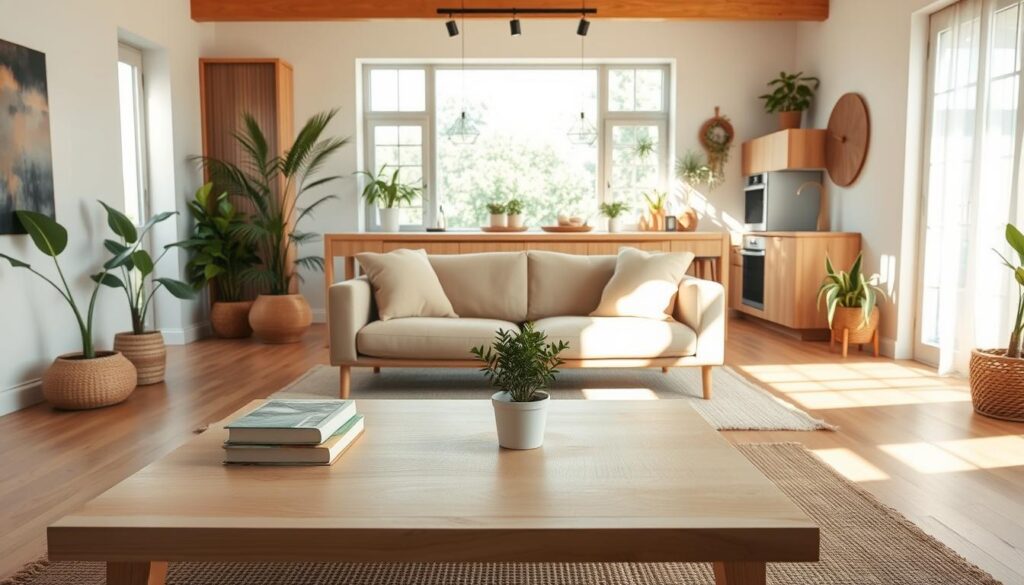
Minimalism is a strong philosophy for those wanting eco-conscious interior design. It means living with fewer things, which cuts down on waste. This way of thinking is key for environmentally conscious interiors that value quality over quantity.
The Environmental Impact of Minimalism
At its heart, minimalism respects raw materials by slowing down new product demand. By not chasing trends, we reduce the strain on natural resources and energy use.
Minimalism also promotes reusing what we already have. This extends the life of our furniture and decor, lowering our carbon footprint. Our homes become reflections of our style and global responsibility.
Tips for Effective Decluttering
Decluttering is more than just getting rid of stuff. It’s about making thoughtful choices about what we keep. Start by reviewing what you have to see what can be reused or fixed before buying new.
- Assess your inventory: Find items that have more than one use or hold real value.
- Prioritize longevity: Choose durable, long-lasting items when you need something new.
- Donate or recycle: Make sure items you no longer need get a second chance through donation or recycling.
The table below shows how changing your habits can make your home more sustainable.
| Habit Type | Traditional Approach | Minimalist Approach |
|---|---|---|
| Material Sourcing | Frequent new purchases | Repurposing existing items |
| Waste Management | Disposal in landfills | Donation and recycling |
| Home Aesthetic | Cluttered and trend-focused | Clean and functional |
| Resource Usage | High energy demand | Low environmental impact |
Upcycling and Recycling in Decor
We think the most beautiful items in a home tell a story of change. By looking differently, we find value in things others see as trash. This way, we create a space that’s both unique and good for the planet.
Creative Upcycling Ideas
Upcycling means making something better from something old. For example, we can turn old pallets into cool garden furniture or coffee tables. It saves money and keeps materials out of landfills.
We can also make new things from old clothes, like throw pillows or wall art. Making sustainable furniture from old materials adds history and character to our homes. It makes decorating a fun, hands-on activity.
Implementing a Recycling System
Some items just can’t be used anymore. Having a good recycling system at home helps us deal with them right. We suggest using bins for different types of waste to make sorting easy.
For broken sustainable furniture, look for local recycling programs. They can take wood or metal for recycling. This keeps materials in use and helps our planet. A good recycling system keeps our homes looking good and waste-free.
Water Conservation in Home Design
Water conservation is key in green home design. It helps lower our bills and eases the load on water resources. Adding sustainable furniture makes our homes even greener.
Low-Flow Fixtures
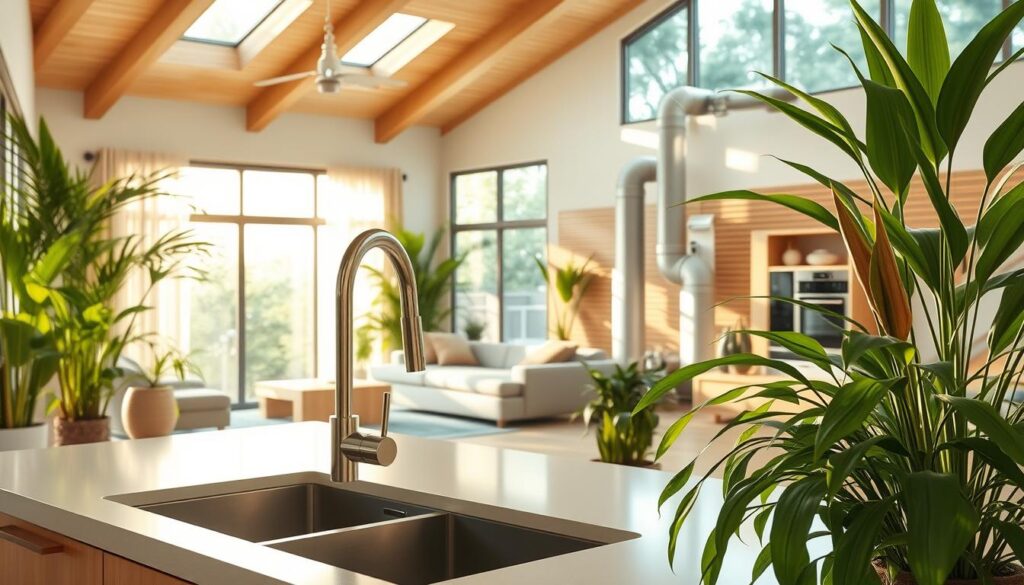
Upgrading to low-flow fixtures is easy and effective. Modern showerheads and faucet aerators save water without losing pressure. These changes help us waste less water every day.
High-efficiency appliances in the kitchen also play a big role. For example, a new dishwasher can use up to 80% less water than washing by hand. Pairing these with sustainable furniture and energy-saving lights makes our homes both eco-friendly and modern.
Sustainable Landscaping Techniques
Outdoor water use is a big part of our home’s water bill. Using sustainable landscaping with native plants and drought-resistant species helps a lot. These plants need less water than regular lawns.
Mulch is another smart choice for gardens. It keeps soil moist and stops weeds. By designing our gardens with water-saving ideas, we make our homes more sustainable. These outdoor choices show our dedication to the environment goes beyond our doors.
Sustainable Textiles and Fabrics
Many home textiles have a secret that can affect our health. When we decorate our homes, we often focus on looks. But the materials we use are just as important.
Choosing sustainable materials helps make our homes healthier. It also supports better ways of making things.
Organic vs. Conventional Fabrics
Conventional fabrics often use harmful chemicals and synthetic processes. Organic options like linen, hemp, and organic cotton are better for the planet. They are also more breathable and comfortable for our homes.
Opting for organic textiles is key to eco-friendly decor. These materials naturally decompose, unlike synthetic fabrics. Choosing high-quality, natural fabrics keeps our homes free from harmful pollutants.
Choosing Sustainable Upholstery
When picking furniture, watch out for hidden chemicals. Many couches have PFAS, known as “forever chemicals.” These chemicals are bad for humans and pets and don’t break down in nature.
Instead, look for natural upholstery options. Choose brands that use untreated wool, organic cotton, or recycled fibers. Making these choices helps make our homes safer and healthier. It also supports a better future.
Smart Technology for Sustainable Homes
By using new technology, we can make our homes more eco-friendly. We can turn regular houses into sustainable architecture that saves energy and resources. These tools help us understand how our daily actions affect the environment.
Energy Monitoring Systems
Energy monitoring systems are key to a green home. They show how much power each appliance uses in real-time. This lets us change our habits to use less energy.
Also, switching to LED bulbs is a smart move. LED bulbs use 75% less energy and last longer than old bulbs. This small change is a big step towards a greener home.
Smart Thermostats and Their Benefits
Smart thermostats are a big step in sustainable architecture. They learn our schedules and adjust the temperature to save energy. This means we only use what we need to stay comfortable.
These systems save money and help the planet. They give detailed reports on how we use energy. With good insulation, they make our homes eco-friendly and cost-effective.
| Technology Feature | Primary Benefit | Impact Level |
|---|---|---|
| Smart Thermostats | Optimized Climate Control | High |
| Energy Monitors | Real-time Usage Tracking | Medium |
| LED Lighting | Reduced Power Consumption | High |
Future Trends in Sustainable Interior Design
Our homes show our values and care for the planet. Looking ahead, we see homes that focus on health and the environment.
The rise of sustainable interior design is changing how we design our homes. We’re moving towards using materials wisely and choosing durable items.
Advancements in Material Science
New materials are making homes safer and more beautiful. Mycelium-based furniture and recycled ocean plastics are great alternatives. These innovations help our homes be better for the planet.
The Integration of Nature
Biophilic design connects our homes to nature. Adding organic textures, water features, and vertical gardens makes our spaces healthier. These trends show we can live comfortably with nature.
Start making eco-friendly choices today. Pick smart energy tech or reclaimed wood. Every choice helps create a greener future. Let’s make our homes better for our families and the earth.