Did you know the average American household spends over $2,000 a year on utilities? Yet, nearly 30% of that energy is wasted. This is due to poor insulation and outdated systems. It shows a huge chance for us to save money and make our homes more comfortable.
With weather patterns getting wilder, making our homes modern is essential. It’s not just a luxury anymore. It’s a strategic necessity to keep our homes cozy all year. By choosing energy-efficient home upgrades, we can cut down our bills and safeguard our homes from rising costs.
These upgrades do more than save us money. They also increase our home’s value. This guide will show you how to turn your home into a green, high-performance space. Let’s see how small changes can lead to long-term prosperity and comfort for our families.
Key Takeaways
- Reducing wasted energy can save the average household hundreds of dollars every year.
- Modernizing insulation and climate systems directly improves daily comfort levels.
- Strategic property enhancements significantly boost overall market value for future resale.
- Transitioning to sustainable living helps mitigate the impact of volatile utility pricing.
- Our comprehensive roadmap simplifies the process of creating a more efficient living environment.
Understanding Energy-Efficient Home Upgrades
Turning our homes into efficient spaces is a step towards a greener future. By picking energy-efficient upgrades for houses, we cut down on our environmental impact. We also make our homes more modern and comfortable.
Definition and Importance
Energy efficiency means using less power to do the same things. It’s key because buildings use almost 40% of all energy in the U.S.
By making sustainable home improvements, we reduce energy waste in our homes. We make sure our heating, cooling, and lighting work better. This way, every bit of energy is used wisely.
Benefits to Homeowners
Choosing eco-friendly renovations brings quick and lasting benefits. One big plus is lower utility bills. This means more money in our pockets every month.
These energy-saving home updates also make our homes more comfortable. Without drafts and with stable temperatures, our homes feel better all year.
In the end, these green home enhancements are about more than saving money. They help us create a healthier, greener home. This supports our well-being for years to come.
Assessing Your Home’s Energy Efficiency
First, we need to check how our homes use energy. This step is crucial before starting any big project. By using data, we make sure our energy-efficient home upgrades are worth it.
Conducting an Energy Audit
A professional energy audit is key for sustainable home improvements. Experts use tools like blower doors and infrared cameras to find air leaks. This helps us know where our homes lose energy, guiding our eco-friendly renovations.
Doing a simple DIY audit is a good start. Look for drafts around windows and doors. This helps us know where to start to make our homes more comfortable.
Identifying Key Areas for Improvement
After the audit, we can focus on the most important energy-saving home updates. Older homes often have bad foundations or old insulation, leading to high bills. Fixing these issues is key to our green home enhancements.
Here are some common problems to look for:
- Drafty window frames that let air out.
- Not enough attic insulation, causing heat loss in winter.
- Old appliances that use too much electricity.
- Leaky ductwork in heating and cooling systems.
By targeting these areas, we can plan our projects well. This careful approach ensures our energy-efficient upgrades for houses save energy and money over time.
Insulation Upgrades for Better Efficiency
Insulation keeps our homes comfy all year round. It acts as a shield, blocking cold and heat. This means our heating and cooling systems work less hard. These energy-efficient home upgrades help save money and make our homes more comfortable.
Types of Insulation Materials
Choosing the right insulation is key for sustainable home improvements. Each part of the house needs a specific R-value for best insulation. Here are some common insulation types we use:
- Fiberglass Batts: A budget-friendly option that fits well between studs and joists.
- Spray Foam: Great for filling gaps and creating a tight air barrier.
- Cellulose: Made from recycled paper, it’s perfect for tight spaces like attics.
- Rigid Foam Boards: Best for insulating basement walls and foundations to keep heat in.
Installation Tips for Homeowners
Doing eco-friendly renovations needs careful work, like sealing air leaks. We must seal gaps around pipes, outlets, and lights to stop energy loss. These energy-saving home updates help keep conditioned air inside.
Some jobs are DIY-friendly, but others need a pro. Insulation must be installed right to avoid moisture problems. Adding ventilation is also crucial for good air quality. By focusing on these green home enhancements, our homes stay efficient for years. Investing in these energy-efficient upgrades for houses saves money and keeps temperatures steady.
Energy-Efficient Windows and Doors
Investing in top-notch windows and doors is key for sustainable home improvements. These entry points often cause heat loss in winter and heat gain in summer. By choosing energy-efficient upgrades, we can cut down on utility bills and keep our homes cozy all year.
Choosing the Right Window Styles
Choosing the right window style is crucial for our eco-friendly renovations. We need to think about our local climate. Some designs are better for ventilation or keeping heat in.
For energy-saving updates, look for frames made from fiberglass or vinyl. These materials don’t warp and keep heat in well. Proper installation is also key to keep our homes tight and energy-efficient.
Benefits of Double or Triple Glazing
Switching to double or triple glazing boosts our home’s energy efficiency. These units have multiple panes with insulating gas, slowing heat transfer. Though they cost more upfront, they save on heating and cooling costs over time.
Multi-pane windows also reduce noise and improve security. The table below shows how different glazing options compare, helping us choose wisely for our homes.
| Glazing Type | Thermal Insulation | Noise Reduction | Cost Efficiency |
|---|---|---|---|
| Single Pane | Low | Minimal | High (Initial) |
| Double Glazing | High | Moderate | Balanced |
| Triple Glazing | Superior | Excellent | Long-term |
Choosing the right glass is crucial for energy-efficient upgrades. Quality materials and expert installation ensure our homes stay comfy and green for years.
Efficient Heating and Cooling Systems
Keeping our homes at the right temperature is key for comfort and saving money. Heating and cooling use more than half of a home’s energy. Upgrading these systems can cut our carbon footprint and keep our homes cozy.
Comparing HVAC Options
Older furnaces use a lot of energy compared to newer options. Electric air-source heat pumps are a top choice for making homes more sustainable. They move heat, not make it, which saves a lot of energy.
Switching to these systems has many benefits. Here are a few:
- Higher efficiency ratings than old furnaces.
- They can heat and cool your home with one unit.
- They use less non-renewable energy for eco-friendly renovations.
- They need less maintenance over time.
Smart Thermostats for Better Control
Smart thermostats can also help save energy. They adjust the temperature based on when you’re home. This means you use less energy when you’re not around.
These green home enhancements give us detailed info on our energy use. This info helps us make better choices about our comfort. With these energy-efficient upgrades for houses, we stay cozy and cut our energy bills.
Harnessing Solar Power
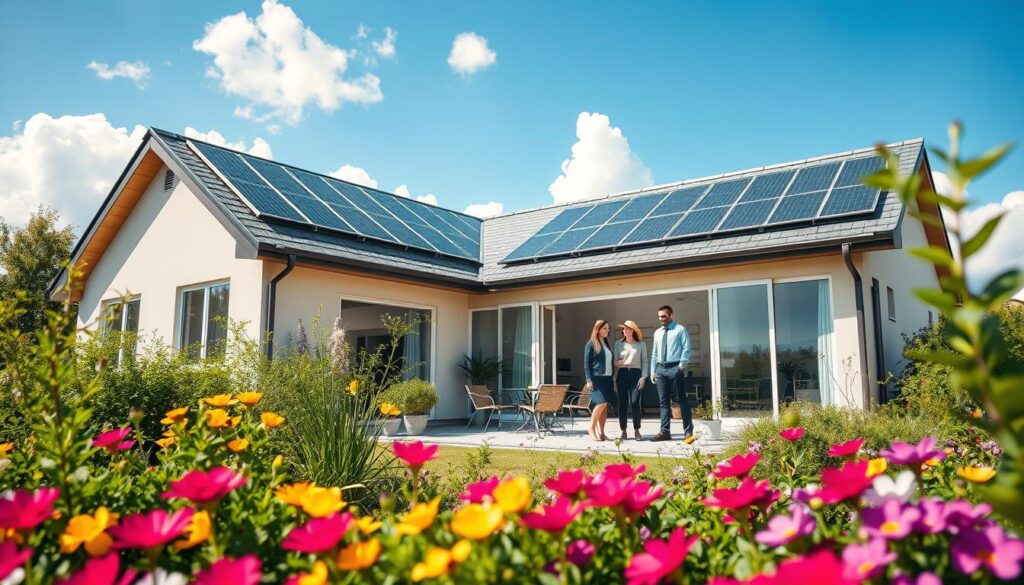
Switching to solar energy is a big step towards a sustainable home. It cuts down our carbon footprint and boosts our home’s value. These energy-efficient home upgrades work best when our home is well-sealed. They’re a great match for other sustainable home improvements.
Installing Solar Panels
Installing solar panels starts with checking our roof’s orientation and sun exposure. We need to make sure our roof can hold the panels and our electrical system can handle the new power. These eco-friendly renovations often get federal tax credits, making them cheaper upfront.
“The best time to plant a tree was twenty years ago. The second best time is now.”
After installation, the system starts saving us money on bills. Successful projects consider a few key things:
- Roof Condition: Make sure your roof is in good shape before putting panels on.
- Local Regulations: Check local rules for permits and grid-tie needs.
- System Sizing: Figure out how many panels you need based on your energy use.
Understanding Different Solar Technologies
Today’s solar tech goes beyond just rooftop panels. We have advanced photovoltaic (PV) systems that turn sunlight into electricity very efficiently. These energy-saving home updates help us use less grid power.
Battery storage systems are a big deal now. They let us save extra energy for nighttime use. This makes our power supply steady. Adding these green home enhancements makes our energy system strong and self-sufficient.
Choosing the right tech depends on our energy needs and budget. Solar power is key for modern, eco-friendly living. Investing in solar now means a cleaner, cheaper future for our homes.
Water Heating Upgrades for Efficiency
Many homeowners forget about the water heater when thinking about energy-efficient upgrades for houses. Water heating is a big part of our energy use at home. Choosing the right technology can lower our bills and help the planet.
Traditional vs. Tankless Water Heaters
Traditional water heaters waste energy by keeping water hot all the time. Tankless systems heat water only when needed. This saves money and energy.
Heat pump water heaters are great for families. They can save hundreds of dollars a year. These eco-friendly renovations are key for saving water and money.
Solar Water Heating Systems
Solar water heating uses the sun to heat our water. Even in cooler places, these systems work well if it’s sunny. They’re a big step towards a greener home.
While they cost more upfront, solar systems save a lot on bills. They offer a clean, reliable energy source. This makes our homes more valuable and eco-friendly.
Energy-Efficient Lighting Solutions
Looking for ways to cut down on utility bills? Start with your lighting. Lighting uses about 6% of electricity in U.S. homes. Yet, it’s easy to make a big difference. By picking energy-efficient home upgrades, we can save money and make our homes look better. These energy-efficient upgrades for houses fit any budget.
LED vs. Incandescent Bulbs
Switching to LEDs is key for sustainable home improvements. LEDs use much less power than old bulbs and last longer. They give better light quality and save energy.
LEDs also last a lot longer than other bulbs. This means we don’t have to replace them as often. Making this change helps our homes use less energy.
Smart Lighting Options
Adding smart tech to our lights is another smart move. Smart lighting lets us control our home’s lighting better. It saves energy by turning off lights when we’re not there.
These systems adjust to our lives, turning off lights when we leave. They also adjust brightness based on daylight. Investing in green home enhancements gives us control over our energy use. Here’s why they’re better than old bulbs.
| Lighting Type | Energy Usage | Average Lifespan | Control Features |
|---|---|---|---|
| Incandescent | High | 1,000 Hours | Manual Switch |
| CFL | Medium | 8,000 Hours | Manual Switch |
| LED | Low | 25,000+ Hours | Smart/Automated |
| Smart LED | Very Low | 25,000+ Hours | App/Sensor/Voice |
These energy-saving home updates make our homes comfortable and affordable. We suggest checking your lighting and thinking about these modern options. They lead to a brighter, greener future.
Eco-Friendly Appliances for Your Home
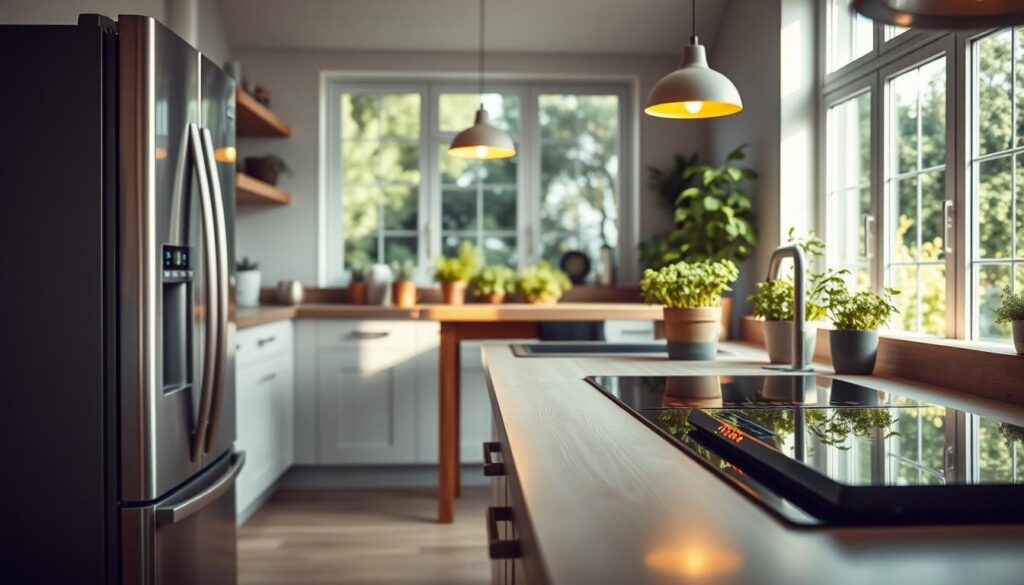
Switching to high-efficiency appliances is a big step in making your home more energy-efficient. Older appliances use too much electricity and water, raising your bills. By choosing energy-efficient home upgrades, you can update your home and help the planet.
Identifying Energy Star Certified Products
When you’re looking to improve your home sustainably, the Energy Star label is key. It shows a product meets strict energy standards set by the EPA. Look for this blue mark on appliances like refrigerators and dishwashers to know you’re getting the best.
These products use smart sensors to save water and electricity. By picking these, you cut down on waste from old tech. It’s a smart move to make your daily tasks greener.
Benefits of Upgrading Major Appliances
Choosing eco-friendly renovations brings quick and lasting benefits. You’ll save money on bills and enjoy better performance. Many new appliances come with smart features to track your energy use.
These energy-saving home updates also help the planet by reducing power grid demand. They make your home more valuable. Upgrading to efficient appliances is a smart choice for a greener, more comfortable home.
Outdoor Improvements for Energy Efficiency
Our homes should be seen as part of a bigger ecosystem. By making energy-efficient home upgrades outside, we can reduce our impact on the environment. These changes work together with our indoor systems to make our homes more comfortable.
Landscaping for Energy Conservation
Planting trees wisely is a key sustainable home improvement. Trees on the south and west sides of our homes provide shade in summer. This reduces the heat inside, making our air conditioning work less hard.
Evergreen trees also block cold winds in winter. This thoughtful planting creates a natural barrier. It helps keep our homes at a steady temperature all year.
Efficient Outdoor Sprinkler Systems
Managing water is crucial for energy-saving home updates. Old irrigation systems waste a lot of water, needing more energy to pump and treat. Smart controllers and drip irrigation send water right to the roots.
These green home enhancements cut down on evaporation and runoff. They keep our gardens healthy while saving water. Using rain sensors stops us from watering in the rain. These systems are a smart addition to our energy-efficient upgrades for houses.
The Role of Home Automation
We’re seeing a big change in how homes use power with smart automation. By linking our devices to a network, we can watch and change our use in real time. These energy-efficient home upgrades make our homes work better with less effort from us.
Smart Home Systems for Energy Efficiency
Smart home hubs are like the brain of our homes, connecting lights, heat, and appliances. These sustainable home improvements make sure our systems work together to save energy. For example, smart thermostats can adjust the temperature based on when we’re home or away.
Adding these smart technologies is a top way to make our homes more energy-efficient. By controlling our climate and lights automatically, we avoid wasting energy. This not only keeps us comfortable but also cuts down our bills.
Benefits of Energy Monitoring Devices
Energy monitoring tools give us a clear view of how much power our appliances use. These eco-friendly renovations are key for spotting energy-wasting devices that use power even when off.
By finding and fixing these energy drains, we make our green home enhancements work even better. The table below shows how different smart features help save energy in our homes.
| Automation Feature | Primary Benefit | Energy Impact |
|---|---|---|
| Smart Thermostats | Adaptive Climate Control | High Savings |
| Smart Lighting | Automated Scheduling | Moderate Savings |
| Energy Monitors | Phantom Load Detection | High Visibility |
| Smart Plugs | Remote Power Cutoff | Energy-saving home updates |
Long-Term Savings and Environmental Impact
Investing in energy-efficient home upgrades leads to lasting financial stability. Homes with green features often sell for up to 30% more. This shows the value of making your home eco-friendly.
Choosing sustainable upgrades cuts down on utility bills and boosts property value. These smart choices protect our assets and save money. It’s a wise move for any homeowner.
Our efforts in eco-friendly renovations ease the load on local power grids. Every small change helps our planet. Start your journey to energy-efficient upgrades today.
Acting now means a comfortable home for years to come. We can turn our houses into efficient models. Let’s make these changes for a brighter, greener future.