Did you know that over 12 million tons of furniture are thrown away in the United States every year? This huge amount of waste shows we need to change how we furnish our homes.
We think choosing eco-friendly home decor doesn’t mean giving up on style. By focusing on quality, we can create spaces that are timeless and sophisticated.
By going for eco-friendly home styling, we make choices that last for years. These choices help cut down our carbon footprint and make our homes more beautiful. Let’s see how to create a conscious, elegant home that cares for the planet.
Key Takeaways
- Prioritize high-quality pieces that offer long-term durability.
- Reduce environmental impact by choosing sustainable materials.
- Focus on timeless aesthetics to avoid frequent replacements.
- Adopt a conscious approach to curating your living space.
- Small, intentional changes lead to a significant reduction in waste.
Understanding Eco-Friendly Home Decor
Creating a beautiful space doesn’t harm the environment. Stylish homes often mix comfort with care for nature. This balance makes our living areas both luxurious and eco-friendly.
What Is Eco-Friendly Home Decor?
Eco-friendly home decor puts the planet’s health first, alongside our needs. It’s not just about looks; it’s about making choices that last. This way, we connect our homes with the natural world.
Sustainable interior design considers every item’s life cycle. We choose items that last, not just trendy ones. This approach lets us create spaces that show our values and are beautiful.
The Importance of Sustainable Choices
Choosing sustainable interior design helps reduce waste. Modern life often means throwing away furniture too soon. By picking durable items, we cut down on waste and help the planet.
Buying items that last saves money and resources. This thoughtful living makes our homes both functional and beautiful for years. Learning these principles helps us create homes that are both stylish and kind to the earth.
Benefits of Eco-Friendly Home Decor
Turning your home into a green oasis brings many benefits. Choosing eco-friendly home decor makes your space better for you and the planet.
Intentional design choices help us avoid items that harm the environment. Environmentally friendly decor lets us create a home that looks and feels great.
Health Advantages
Many furniture and textiles contain harmful chemicals. These can release toxins into our air, causing health problems. Opting for natural materials keeps our homes safe and healthy.
Environmental Impact
Standard home goods often lead to waste and pollution. For example, synthetic fabrics can pollute our oceans. Environmentally friendly decor helps reduce these issues by supporting green production and cutting down on waste.
Cost Savings
Sustainable items might cost more upfront, but they save money in the long run. Natural materials last longer, so we don’t need to replace them as often. Investing in eco-friendly home decor is a smart choice that saves money and offers better comfort.
| Feature | Conventional Decor | Eco-Friendly Decor |
|---|---|---|
| Material Source | Synthetic/Plastic | Natural/Renewable |
| Chemical Content | High VOCs/Toxins | Non-Toxic/Safe |
| Durability | Low (Short-term) | High (Long-term) |
| Environmental Footprint | High Waste | Low Impact |
Materials to Consider for Eco-Friendly Decor
Choosing natural materials for home decor makes our spaces beautiful and eco-friendly. The right materials are key to a sustainable interior design. By picking items that are good for the planet, we show our homes are part of a greener future.
Reclaimed Wood
Reclaimed wood adds warmth and history to our homes. It comes from old barns or factories, avoiding waste. This choice is great for the environment, as it saves trees.
Bamboo
Bamboo is a fast-growing, renewable resource. It’s perfect for flooring and furniture. Bamboo products are strong, light, and fit well with modern styles.
Organic Fabrics
We choose textiles without harmful chemicals or dyes. OEKO-TEX-certified textiles ensure our fabrics are safe. Adding these textiles makes our homes more eco-friendly.
Recycled Glass
Recycled glass turns waste into beautiful items like vases and tiles. It saves energy and supports a circular economy. Choosing recycled glass helps conserve resources.
We focus on industry standards to make a real difference. FSC-certified wood and Greenguard-certified furniture prove our choices are effective. These standards help us ensure our homes are truly sustainable.
Tips for Choosing Eco-Friendly Furniture
We think making a beautiful home shouldn’t harm our planet. When we pick new furniture, we can choose items that show our values and help the future. By focusing on quality and sustainability, we create a space that’s both personal and eco-friendly.
Look for Third-Party Certifications
Finding green living products can be tough without a guide. Look for labels from trusted third-party groups that check environmental claims. These labels mean materials are used wisely and made safely.
“The greatest threat to our planet is the belief that someone else will save it.”
Search for stamps like the Forest Stewardship Council (FSC) for wood or Greenguard for low chemical emissions. These signs give us peace of mind, knowing our furniture supports good industry practices.
Consider Local Options
Buying furniture from local makers or nearby factories helps the planet. Shipping long distances pollutes a lot, so buying close to home is better. Local purchases also help our community and often offer unique, handcrafted eco-conscious home furnishings that big brands can’t match.
Modular and Multi-Functional Designs
Adaptable furniture is key to a green home. Modular and multi-functional designs let our furniture grow with us, avoiding the need to constantly replace it. Here’s why versatile pieces are great:
- Longevity: Items that do many things stay in our homes longer.
- Waste Reduction: Furniture rental services keep quality items in use, not in landfills.
- Space Efficiency: Modular systems use small spaces well, cutting down on extra furniture.
Choosing versatile green products cuts down on waste and keeps our homes useful for years. Investing in quality, adaptable eco-friendly furniture is a wise choice for a greener lifestyle.
Decorating with Plants
Adding greenery is a simple way to refresh our homes and improve air quality. It brings nature inside, making our space vibrant and restorative.
Benefits of Indoor Plants
Indoor plants act as natural air purifiers in our homes. They remove common toxins and release oxygen, making it easier to breathe.
Plant care also boosts our mental health. Caring for a plant makes us feel more connected to nature.
Easy Care Plants for Beginners
For beginners, start with plants that are easy to care for. These varieties are great for those who don’t want to deal with complicated care.
- Snake Plant: It thrives in low light and needs water only when dry.
- Pothos: A versatile vine that does well in different indoor settings.
- ZZ Plant: It’s perfect for dark spots and can survive with little care.
Creative Plant Displays
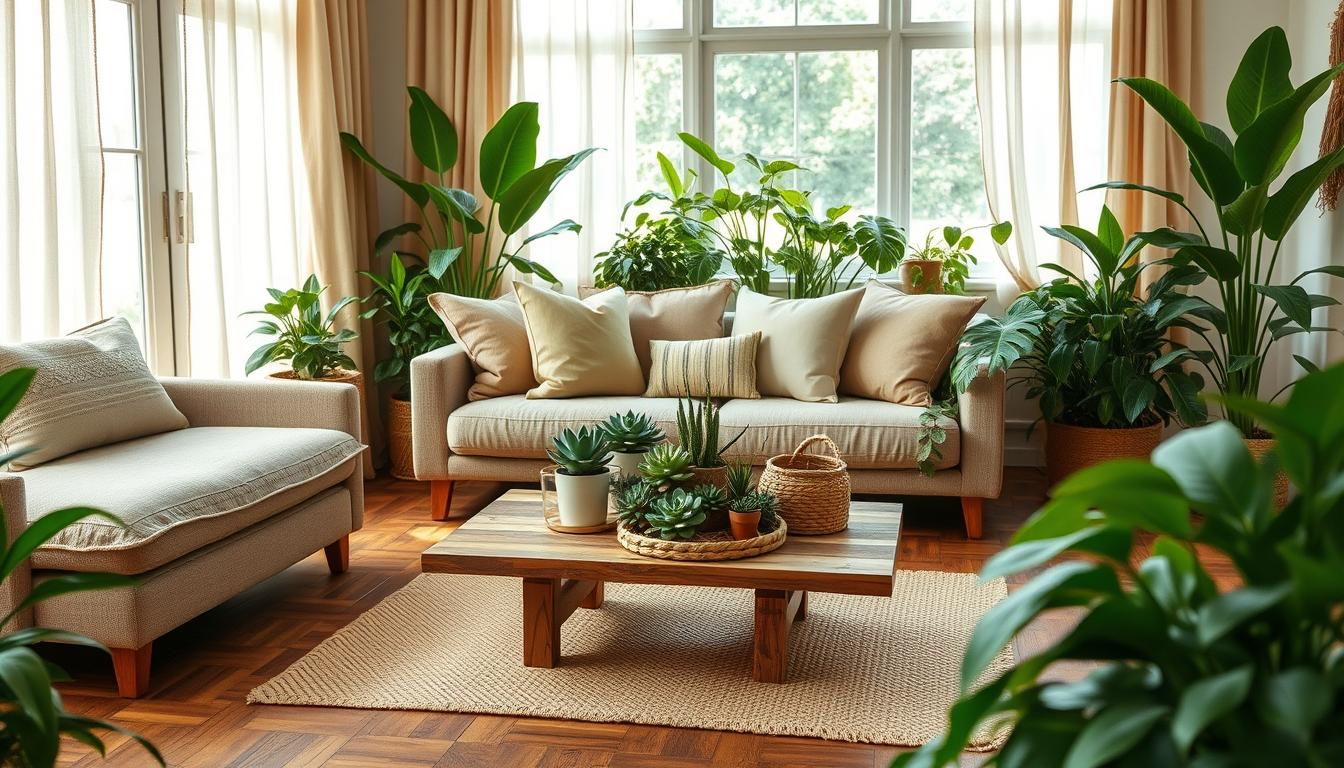
How we display our plants is key. We choose natural materials for home decor to keep our style sustainable and chic.
Use earth-friendly home accessories like terracotta pots or seagrass baskets. They add texture and keep our space eco-friendly. This way, our indoor garden is a stylish, green highlight of our home.
Eco-Friendly Paints and Finishes
When we focus on eco-friendly home styling, we must consider the impact of paints on our indoor environment. Traditional paints often release volatile organic compounds, or VOCs. These VOCs can linger in our homes long after the walls are dry.
These chemicals contribute to poor indoor air quality. They may cause respiratory irritation or headaches for sensitive individuals.
Low-VOC and Non-Toxic Options
Choosing the right finish is a vital step in creating a healthy sanctuary. We prioritize products labeled as low-VOC or zero-VOC. This ensures our living spaces remain free from harmful off-gassing.
Many modern brands now offer high-quality, water-based paints. These paints provide excellent coverage without the heavy chemical load of older formulas.
When we select these safer alternatives, we protect our families and the environment simultaneously. It is essential to check labels for third-party certifications. These certifications verify the absence of toxic additives.
By making this simple switch, we significantly improve the air we breathe every single day.
DIY Natural Paint Recipes
For those of us who enjoy a hands-on approach, creating natural finishes is rewarding. We can mix simple ingredients like flour, water, and natural pigments. This creates non-toxic milk paint for furniture projects.
These mixtures are biodegradable and free from harsh synthetic solvents found in commercial products. Using natural ingredients allows us to maintain our commitment to eco-friendly home styling while achieving a unique, matte aesthetic.
We find that these DIY methods are not only cost-effective but also provide a deeper connection to the items in our homes. Embracing these natural techniques helps us reduce our chemical footprint. It keeps our decor looking beautiful and intentional.
Upcycling Ideas for Home Decor
Our homes become more personal and sustainable when we choose to repurpose rather than replace. By embracing eco-conscious home furnishings, we can significantly reduce waste and add unique character. This creative process turns forgotten items into functional treasures.
Transforming Old Furniture
Refurbishing furniture is a great way to refresh a room without buying new. Instead of throwing away a worn-out wooden chair or a scratched table, we can give them a new look. Simple techniques like sanding, painting, or reupholstering can make a big difference.
Fresh paint or a new fabric pattern can completely change a piece’s look. This approach saves money and keeps furniture durable and full of history.
Creative Uses for Glass Jars
Glass jars are incredibly versatile and often end up in the recycling bin. We can turn them into ethical home decor by using them as stylish storage solutions. They can hold pantry items, bathroom supplies, or even serve as rustic vases for fresh flowers.
Adding a touch of creativity, like painting the lids or wrapping the glass in twine, makes a jar into a beautiful accent piece. These small changes help us keep our home organized while reducing environmental impact.
“The most sustainable object is the one that already exists in your home.”
Fabric Scraps into Decorative Items
Leftover fabric scraps are perfect for creating unique earth-friendly home accessories. We can sew them into colorful throw pillow covers, quilted wall hangings, or even reusable coasters.
These projects let us express our personal style while ensuring no material goes to waste. By repurposing textiles, we contribute to a circular economy right from our own living rooms.
| Material | Upcycling Potential | Difficulty Level |
|---|---|---|
| Old Wood Furniture | High (Refinishing) | Moderate |
| Glass Jars | High (Storage/Decor) | Easy |
| Fabric Scraps | High (Textiles) | Easy |
Energy-Efficient Lighting Solutions
Changing our homes to use less energy starts with how we light them. Lighting affects our mood and how much energy we use. By picking the right green living products, we can make our homes cozy and save money on bills.
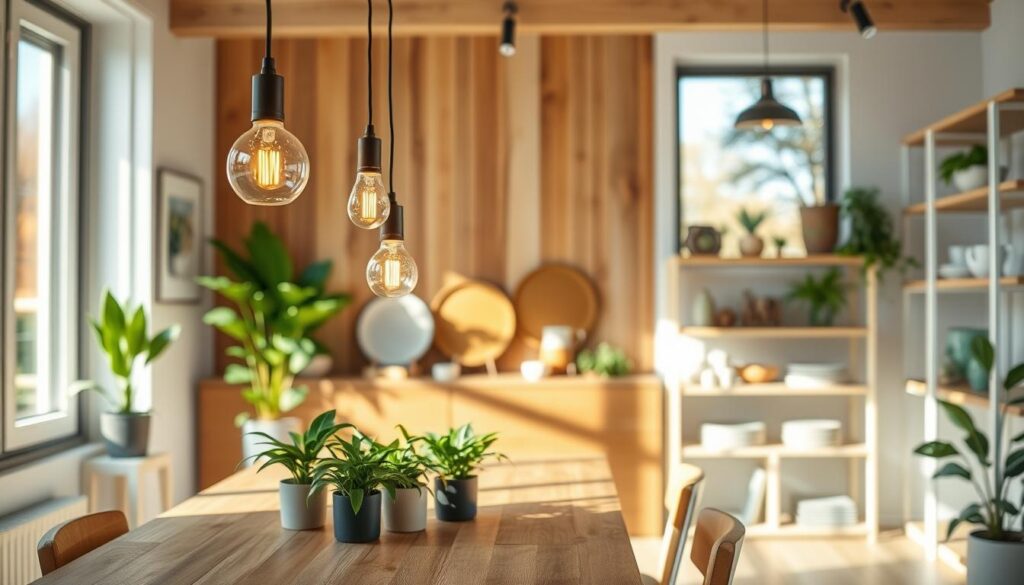
LED Options
Choosing LED bulbs is a big step towards using less electricity. These bulbs use 75% less power and last much longer than old bulbs. Buying good LEDs helps us make our homes green without losing brightness or style.
LEDs also come in many colors, letting us change the feel of any room. We can pick cool light for work or warm light for relaxing. This change is key to modern, eco-friendly home design.
Using Natural Light
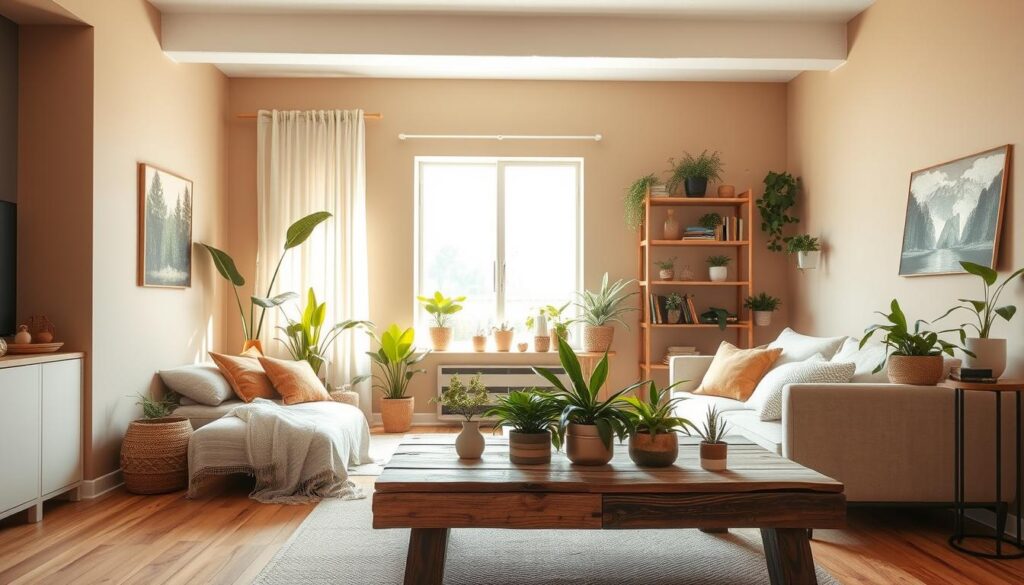
Using more natural light is also important. By designing our homes well, we can light them up with the sun. Placing furniture right and using light colors helps spread sunlight around.
Choosing the right window treatments is also key. Sheer curtains or blinds let us control how much sun we get. Using natural light helps us save energy and stay connected to nature.
“Sustainability in home design is not just about the materials we choose, but how we interact with the resources that surround us every day.”
| Lighting Type | Energy Usage | Lifespan (Hours) | Efficiency Rating |
|---|---|---|---|
| Incandescent | High | 1,000 | Low |
| CFL | Medium | 8,000 | Moderate |
| LED | Low | 25,000+ | Excellent |
By mixing smart tech with natural design, our homes stay stylish and green. Choosing these green living products helps our planet and makes our homes better and cheaper to live in.
Creating a Minimalist Eco-Friendly Space
Minimalism and sustainability aim to reduce our environmental impact. By focusing on what we need, we choose environmentally friendly decor that lasts. This helps us avoid constant buying that harms our planet.
Benefits of Minimalism
Minimalism means valuing quality over quantity in our homes. We choose durable items over disposable ones. This way, every object in our home has a purpose or brings joy.
“Simplicity is the ultimate sophistication.”
Minimalism also saves resources and time. With fewer items, we clean and organize less. This lifestyle makes it easy to use earth-friendly home accessories without feeling cluttered.
Practical Tips for Decluttering
Begin by reviewing your belongings. Ask if each item adds value or just takes up space. If you haven’t used something in a year, it’s time to let it go.
Try the “one-in, one-out” rule to keep your space tidy. This rule helps you avoid clutter. Choose items that reflect your values and support a green lifestyle.
| Habit Type | Consumerist Approach | Minimalist Approach |
|---|---|---|
| Shopping | Frequent impulse buys | Thoughtful, planned purchases |
| Maintenance | High cleaning effort | Low maintenance, open space |
| Impact | High waste production | Low environmental footprint |
Decluttering is more than getting rid of stuff. It’s about making space for what’s important. By removing excess, we create a calm environment that supports our well-being. This is key to living a more mindful and sustainable life.
Making Smart Shopping Choices
Building a beautiful home means changing how we buy things. We can make our homes lovely by choosing quality over quantity. This way, we help the planet stay healthy.
Identifying Responsible Producers
We search for brands like West Elm or Avocado Green Mattress. They show us how to make sustainable choices. These companies use safe materials and are open about where they get them.
We look for labels with certifications. This makes sure our products are good for the environment.
Mastering the Art of Thrifting
Local vintage shops and Chairish have special items with stories. Buying second-hand is good for the planet and makes our homes unique. It’s a way to add character and support ethical decor.
Rejecting Disposable Trends
Fast furniture trends often end up in landfills quickly. We choose durable, natural materials for our homes. This way, we create lasting beauty and responsibility in our spaces.