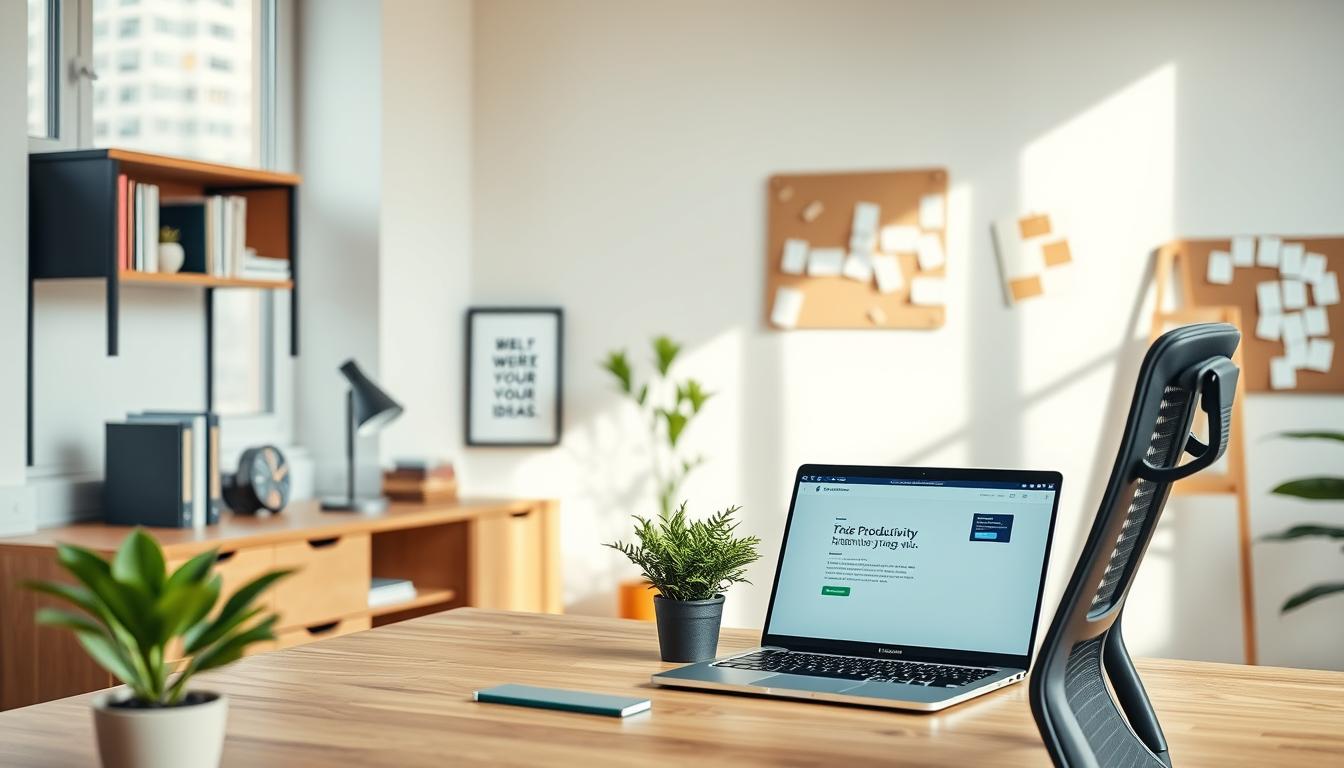
Did you know that remote workers who have a dedicated space for work see a 25% boost in daily output? Many of us find it hard to get into work mode when our living room is our office. Having a special area for work is key to success and happiness.
A well-thought-out home office design is like a signal to our brains. It tells us it’s time to focus and leaves home distractions behind. By setting clear boundaries, we save our mental energy and work better.
It’s not just about looks; it’s about improving how you work. A good home office design helps us keep work and personal life separate. This balance is crucial for staying motivated and avoiding burnout in today’s flexible world.
Key Takeaways
- Dedicated workspaces significantly boost daily productivity levels.
- Physical boundaries help the brain transition into a professional mindset.
- A structured environment reduces distractions and improves focus.
- Separating work from leisure time is vital for long-term well-being.
- Strategic planning of your area fosters career growth and consistency.
Understanding the Importance of Home Office Design
Spending time on a good home office design can change your day from messy to organized. Working from a kitchen table or couch mixes work with home life. This mix makes it hard to focus and can make you tired.
A special workspace is like a psychological trigger for work. It tells your mind it’s time to work. A space just for work helps you stay focused and clear-headed.
Our surroundings greatly affect our sharpness. A well-thought-out area helps you get into a work mindset. For tips, check out these home office design tips.
Your office should help you reach your goals, not block them. A well-designed home office boosts your productivity and health. Small changes can make a big difference in how you feel and work every day.
Key Elements of a Productive Workspace
Turning a spare room into a productive space starts with three key elements. We aim to create an environment that supports your physical and mental health all day.
Ergonomics and Comfort
Ergonomics is about designing spaces for safe and efficient use. Investing in an adjustable chair or a split keyboard can prevent long-term strain and inflammation.
Your body needs support during long work hours. Proper alignment helps reduce fatigue and keeps your energy up all day.
Proper Lighting
Lighting is crucial for task perception and focus. Place your desk near a window for maximum natural light.
When natural light is scarce, use high-quality task lamps to cut down eye strain. Consistent illumination keeps you alert and avoids the afternoon slump common in remote work.
Organization and Storage
A cluttered desk can make your mind feel cluttered too. Effective home office organization is key to a clear mind while working on complex tasks.
Use vertical shelving and drawer dividers to keep important items within reach. These home office storage solutions help keep your space tidy and professional.
Try the 15-minute work-break method to stay focused. It encourages you to reset your space and remove unnecessary items, keeping your work flow smooth.
Choosing the Right Location for Your Home Office
Turning a corner of your home into a professional office starts with picking the right spot. You might have a spare room or just a small nook. The desk’s location greatly affects your daily work.
When space is tight, there are small home office ideas to make the most of it. Consider a desk in a quiet hallway or a closet for a hidden workspace. These ideas help you create a professional space without needing a lot of room.
Natural light is key for comfort during long screen times. Place your desk near a window to reduce eye strain and improve your mood. But, avoid glare by setting your monitor at a 90-degree angle to the window.
Getting your home office layout right is crucial for privacy and less distraction. If you live with others, put your desk away from busy areas like the kitchen or living room. A well-thought-out home office layout sets a boundary, signaling work time to others. This helps you stay focused and productive.
Essential Furniture for Your Home Office
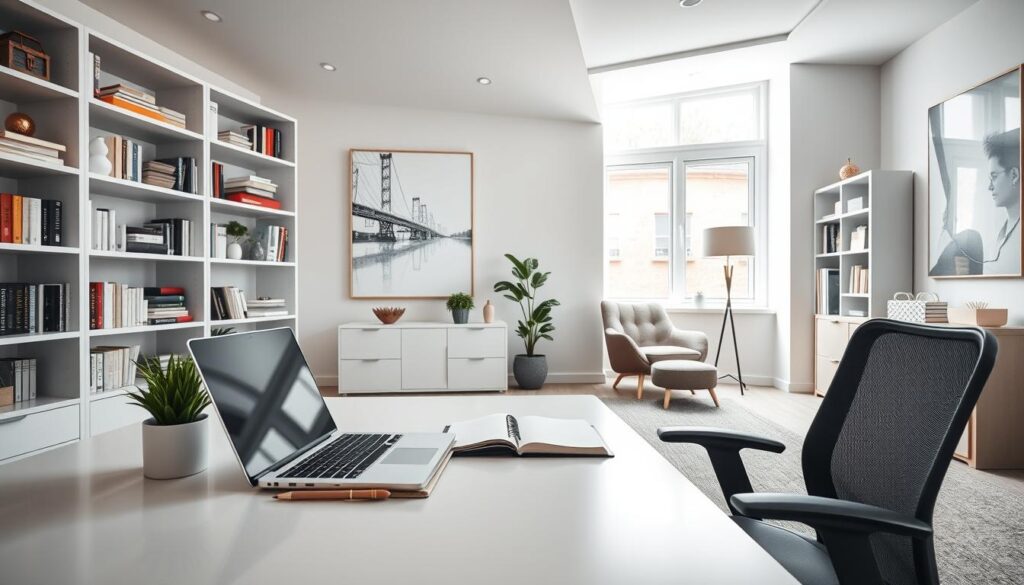
Creating a modern home office means picking furniture that looks good and works well. Choose items that fit your work style and keep your space looking professional. Quality furniture makes your office comfortable and efficient for years.
Desks and Workstations
The desk is the heart of your office. When picking home office furniture, think about how much space you need. Look for desks with cable management to keep things tidy.
- Standing desks: These help you switch between sitting and standing for better health.
- L-shaped desks: Great for using corner space and doing multiple tasks at once.
- Minimalist writing desks: Best for those who like a simple, clutter-free area.
Chairs and Seating Options
Your chair is key for your health. Choose one with ergonomic design for back support during long hours. A good chair should fit your body perfectly.
Look for adjustable armrests, seat depth, and tilt tension. These features help you stay comfortable and avoid strain. Your chair should feel like part of your body.
Storage Solutions
Good home office storage solutions keep your space organized and your mind clear. Without them, clutter can quickly take over. Use a mix of open and closed storage to keep things tidy.
Here are some useful storage ideas:
- Mobile filing cabinets: These offer flexible storage that can be hidden under your desk.
- Wall-mounted shelving: Use vertical space for books and decorations without taking up floor space.
- Desk organizers: Keep small items like pens and sticky notes off your desk.
With these home office storage solutions, you can stay organized and focused. A tidy room lets you concentrate on your work without distractions. Thoughtful furniture choices make a big difference in your workday.
Color Psychology in Home Office Design
Color psychology is key in creating a productive home office design. The colors we choose can affect our energy, clarity, and mood at work. By picking the right colors, we can turn any small space into a work haven.
Calming Colors for Focus
For deep focus, choose cooler tones. Soft blue, sage green, or muted gray can calm your heart rate and reduce stress. These colors help create a serene environment that keeps distractions away and boosts mental endurance.
“Color does not add a pleasant quality to design – it reinforces it.”
If your office is dark, use lighter, cooler neutrals to make it feel open. A light off-white or dove gray can make the space look brighter. This trick is essential in home office design for small spaces.
Energizing Colors for Creativity
For creative tasks, warm colors are great. Yellow, coral, or warm terracotta can spark your mind and boost creativity. Use these colors as accents to avoid visual overload.
Color can also change how we see our space. A bold accent wall can make a room feel deeper. Monochromatic schemes bring order and cohesion. The best home office design balances these elements for focus and creativity.
Incorporating Technology into Your Office Design
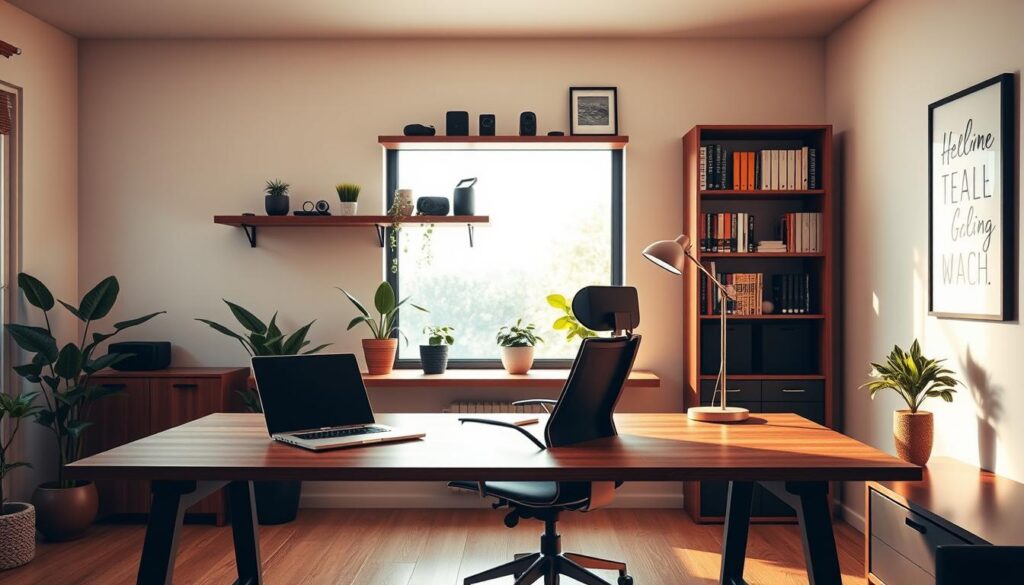
Technology is key to a productive home office. When setting up your workspace, think about how it affects your daily tasks and comfort. A good home office layout makes sure your devices are easy to reach without cluttering your space.
Essential Tech Gear
Having reliable tools is crucial for staying productive. We suggest getting wireless peripherals like keyboards and mice to cut down on desk cables. Cable organizers, like under-desk trays, keep your home office layout tidy and help you focus.
Good monitors and docking stations are also important. They let you work on multiple screens at once, which is great for complex tasks. Make sure your power strips can handle surges to protect your expensive gear.
Smart Home Integration
Smart home tech can make your office better. Use voice assistants or apps to change your lights throughout the day. This automation helps your eyes by keeping the light right for the time of day.
Smart thermostats are also useful. They keep your office at the perfect temperature, so you don’t have to adjust it all day. This makes your workspace more comfortable and helps you stay focused.
| Tech Category | Primary Benefit | Implementation Tip |
|---|---|---|
| Wireless Peripherals | Reduces desk clutter | Use Bluetooth-enabled devices |
| Smart Lighting | Reduces eye fatigue | Sync with daylight hours |
| Cable Management | Improves organization | Use under-desk cable trays |
| Smart Thermostat | Enhances comfort | Set schedules for work hours |
Personalizing Your Workspace
Turning a plain workspace into a cozy spot is key for staying productive. By choosing the right home office decor, you make a space that meets your work needs and shows off your style. A space that feels like you helps you stay focused, even when work gets long.
Displaying Personal Items
Adding special items to your desk can make workdays better. It could be a family photo, a travel keepsake, or a favorite art piece. These items remind you of what’s important.
But, keep your desk tidy to avoid distractions. Here are some tips for home office decor:
- Put small items on a decorative tray to keep things neat.
- Change out your personal items with the seasons to keep things fresh.
- Use shelves for bigger items to keep your desk clear.
Creating a Motivational Wall
A wall for inspiration can help you stay focused and motivated. Pin up quotes, vision boards, or project goals to turn a blank wall into a goal reminder. For help with your layout, consider expert design services.
Your motivational wall should be seen often but not right in front of you. This way, you can glance at it for motivation without losing your train of thought. Strategic placement is crucial for keeping your home office decor inspiring, not cluttered.
Maximizing Small Spaces for Home Offices
Working in a small space can be very creative. It helps us focus on what’s important for our work. The right home office decor can make even the smallest area feel welcoming.
Space-Saving Furniture Options
Choosing the right home office furniture is key in small spaces. Look for wall-mounted desks or folding tables that can be put away. These options keep the floor clear and provide a good place for laptops.
Using items like ottomans with hidden storage or chairs that slide under the desk is smart. These compact, ergonomic designs keep us comfortable without taking up too much space. We focus on quality to keep our area feeling open and professional.
Vertical Storage Solutions
When space is tight, we turn to the walls for home office organization. Floating shelves keep important documents and supplies within reach. Tall, narrow bookcases make the room feel bigger by drawing the eye up.
Wall-mounted pegboards are great for organizing tools and stationery. Using vertical space keeps our desks clear and our minds focused. Smart storage is the key to a productive and organized home office, no matter the size of your home.
Tips for Creating a Multi-Functional Office
Many of us struggle to balance work and home life. Our living spaces need to change throughout the day. With smart design strategies, we can stay productive in spaces that serve more than one purpose.
Home Office and Guest Room
It’s possible to have a space for work and guests. A Murphy bed or sleeper sofa can save space during work hours. These items quickly turn the room into a cozy bedroom.
For clear work boundaries, use a dedicated desk. Store work papers in closed cabinets before guests arrive. This helps you leave work behind when the day ends.
Home Office and Play Area
Combining an office with a play area needs organization and clear boundaries. Rugs or different lighting can mark the office and play areas. This helps you stay focused while keeping kids nearby.
“The most successful spaces are those that evolve with the people who use them, blending utility with comfort seamlessly.”
Use vertical storage solutions to keep toys and office supplies apart. Labeled bins help keep clutter out of your work area. Here’s how to manage these dual spaces effectively.
| Feature | Office & Guest Room | Office & Play Area |
|---|---|---|
| Primary Furniture | Murphy Bed / Sleeper Sofa | Storage Bins / Activity Table |
| Storage Style | Closed Cabinets | Open Baskets / Shelving |
| Key Benefit | Space Efficiency | Supervision & Organization |
| Boundary Method | Room Dividers | Area Rugs / Zoning |
Maintaining a Work-Life Balance
When your living room is also your office, setting boundaries is key. It’s hard to stop work when your desk is just a few steps away. Creating a routine helps keep your mind healthy and ensures success.
Defining Office Hours
Having a set schedule, like 9:00 to 5:00, tells your brain when to work and when to relax. This is crucial to avoid burnout and keep stress low. Sticking to these hours means your personal time is truly yours.
Working from home can be more focused if you treat it like an office. When your workday ends, it’s important to leave your desk. This lets you rest and come back to work with a clear mind the next day.
Setting Boundaries
Talking clearly with family or roommates is key to a productive home office. Set expectations early so everyone knows when you’re not to be disturbed. Respecting these boundaries keeps everyone happy and lets you focus on work.
Cleaning your workspace every day is also helpful. Clearing your desk and closing your laptop helps you switch from work to home mode. This simple step helps you leave work worries behind and enjoy your evening.
| Habit Type | Healthy Practice | Unhealthy Practice |
|---|---|---|
| Schedule | Fixed 9:00 to 5:00 | Working irregular hours |
| Environment | Tidying desk daily | Leaving clutter overnight |
| Communication | Setting clear availability | Allowing constant interruptions |
| Mindset | Complete disconnection | Checking emails at dinner |
Trends in Home Office Design for 2024
Professionals are changing how they set up their workspaces this year. They now focus on wellness and being eco-friendly. This makes sure your office stays useful for a long time.
Biophilic Design Elements
Bringing nature into your office can lower stress and improve thinking. West Elm has planters and wood pieces that make your space feel like outdoors. Adding plants or natural materials makes your office a calm place for focus.
Minimalism and Sustainability
A simple office means less clutter for a clearer mind. Herman Miller’s eco-friendly furniture helps your office last longer and is better for the planet. This style is both beautiful and responsible. It’s time to update your office to meet your work and health needs.