Did you know that nearly 90% of homeowners think the feel of their home comes from how they light it? The dining room is the heart of the home. It’s where families come together for meals and celebrations.
Choosing the right dining room lighting is key to setting the mood. The right dining room light fixtures can turn a simple room into a beautiful and inviting place.
We’ll show you how to mix looks with function. Our aim is to make sure your space is always lit right for any event. Creating the perfect mood begins with knowing how lighting works with your furniture and decor.
Key Takeaways
- Understand the importance of illumination in shared home spaces.
- Learn how to balance aesthetic appeal with daily utility.
- Discover tips for selecting pieces that match your interior style.
- Master the art of creating a welcoming atmosphere for guests.
- Ensure your chosen hardware provides sufficient brightness for tasks.
Understanding the Importance of Dining Room Lighting
The dining room is more than just a place for meals. It’s a key spot for family bonding and socializing. The right dining room lighting ideas can turn it into a cozy, welcoming space for everyone.
How Lighting Affects Mood
Lighting sets the mood in our homes. Warm tones create a cozy feel, perfect for deep conversations at dinner.
Bright, cool light makes a room lively and alert. It’s great for breakfast or homework. By trying out different dining room lighting ideas, we can adjust the mood to fit our needs.
“Light is the most important element in interior design, as it dictates how we perceive the space and how we feel within it.”
Different Lighting Levels
Getting the right mix of lighting is key. We use ambient, task, and accent lighting to keep the room both functional and beautiful.
The table below shows how different light levels affect your dining area:
| Lighting Level | Primary Function | Ideal Atmosphere |
|---|---|---|
| High Intensity | Cleaning and Tasks | Energizing and Clear |
| Medium Intensity | Casual Dining | Balanced and Comfortable |
| Low Intensity | Romantic Dinners | Intimate and Relaxing |
By mixing these levels, you control your space. Using these dining room lighting ideas makes your home ready for any event, big or small.
Types of Dining Room Lighting
Exploring different types of lighting can turn a simple room into a stylish dining area. When picking dining room light fixtures, think about looks and function. A good lighting plan makes every meal feel special.
Chandeliers
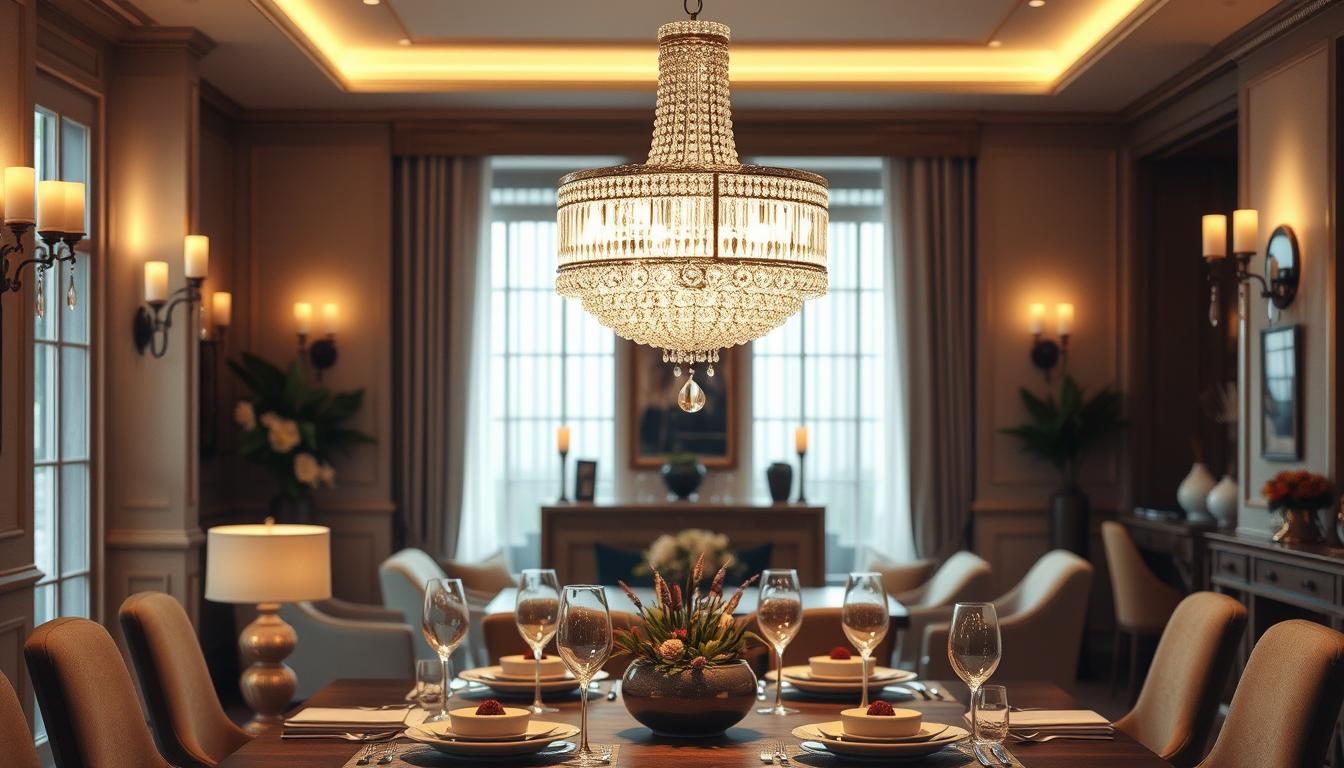
The dining room chandelier is a classic choice. It’s often the room’s main attraction, adding elegance. Make sure the chandelier fits your table size for a balanced look.
Pendant Lights
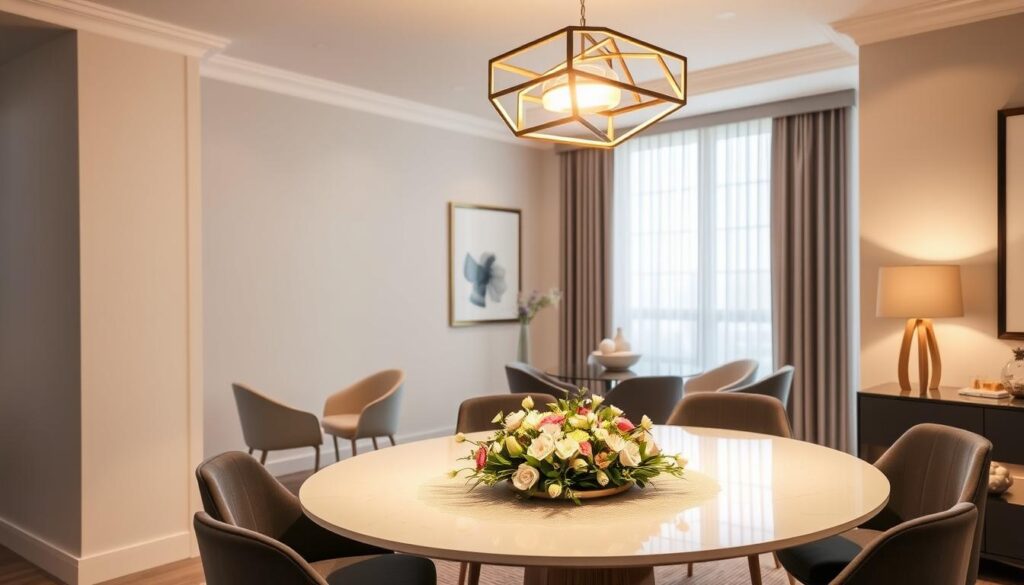
Dining room pendant lights are modern and versatile. They work well with long tables, lighting evenly. You can also group them for a unique, stylish look.
Wall Sconces
Wall sconces add depth and interest. They give a soft light that’s nice with overhead lights. They’re great for showing off art or adding warmth around the room.
Recessed Lighting
For a simple look, try dining room ceiling lights that fit into the ceiling. They brighten the room without taking up space. Use a dimmer to control the light.
| Fixture Type | Best Use Case | Visual Impact |
|---|---|---|
| Chandelier | Formal dining areas | High (Statement piece) |
| Linear Pendant | Rectangular tables | Medium (Uniform) |
| Wall Sconce | Accent lighting | Low (Soft glow) |
| Recessed Light | General illumination | Minimal (Clean look) |
Consider Your Dining Room Style
Choosing the right lighting is key to a balanced dining space. The right fixture can be a focal point, linking architecture and design. By picking pieces that match your furniture, you create a space that looks intentional.
Traditional vs. Modern
Traditional spaces look great with ornate chandeliers and classic finishes. These add elegance and history. On the other hand, modern dining room lighting goes for simple designs to keep the space open.
Rustic and Farmhouse Designs
Rustic and farmhouse styles use natural materials. You’ll see fixtures made from reclaimed wood, wrought iron, or seeded glass. These materials add a warm, organic texture to the dining area.
Contemporary vs. Industrial
Today, dining room lighting trends favor industrial looks with exposed bulbs and matte black metal. Contemporary designs, though, play with shapes and LED lights. Your choice depends on whether you want bold or sleek.
| Style | Primary Material | Design Focus |
|---|---|---|
| Traditional | Brass or Crystal | Ornate Elegance |
| Rustic | Reclaimed Wood | Organic Warmth |
| Industrial | Matte Metal | Raw Functionality |
| Contemporary | Glass or Steel | Geometric Precision |
Determining the Right Brightness
Getting the right light levels makes your dining room perfect for any event. When picking modern dining room lighting, think about the size and light strength of the fixture. A well-lit room makes guests feel at ease while eating and works well for other tasks too.
Lumens Explained
Many of us still choose bulbs by wattage, but lumens show how bright they are. Lumens tell us how much light a bulb gives out. This is key when picking the right light for your space.
Choosing the right lumen output keeps your space balanced. A big or too bright light can cause glare. This can ruin the look of your modern dining room lighting. To avoid this, figure out how many lumens you need based on your room’s size.
Adjustable Brightness Features
Dimmer switches are the best way to control light levels. They let you change the light from bright for homework to soft for dinner. This makes your home’s ambiance easy to change.
Use high-quality dimmers that work with your LED bulbs to stop flickering. This flexibility is key in sophisticated design. It lets your space fit your lifestyle needs all day long. Here’s a guide for different dining room activities:
| Activity | Recommended Lumens | Lighting Mood |
|---|---|---|
| Formal Dinner | 300 – 500 | Warm and Intimate |
| Casual Dining | 500 – 800 | Balanced and Clear |
| Homework/Projects | 800 – 1200 | Bright and Focused |
| Cleaning/Maintenance | 1200+ | Maximum Visibility |
By choosing the right fixtures and using dimmable tech, you can perfect your modern dining room lighting. This way, your dining area is both useful and a stunning spot for gatherings.
Choosing the Correct Color Temperature
Color temperature is key in today’s dining room lighting trends. It decides if your space feels cozy or bright. Choosing the right Kelvin rating makes your dining area both useful and welcoming.
Warm vs. Cool Lighting
Color temperature is measured in Kelvins (K). Lower numbers, like 2,000K to 3,000K, give a warm, yellowish glow like candlelight. Higher numbers, from 4,000K up, offer a cooler, blue-white light, often seen in modern offices.
- Warm White (2700K-3000K): Great for a relaxing, intimate setting.
- Neutral White (3500K-4000K): Good for spaces that need a balanced look.
- Cool Daylight (5000K+): Best for areas needing bright light, but not for dining.
“Lighting is the final touch that brings a room to life, turning a simple meal into a memorable experience.”
The Impact of Color on Dining Experience
The color of your light greatly affects how food and decor look to guests. Warm lighting makes wood furniture richer and food more appealing. Cool lighting, on the other hand, can make colors look washed out or stark, affecting the comfort of your dining room.
| Temperature | Best Use | Mood |
|---|---|---|
| Warm (2700K) | Formal Dining | Cozy & Relaxing |
| Neutral (3500K) | Casual Meals | Clean & Balanced |
| Cool (5000K) | Task Lighting | Bright & Energetic |
Try out different bulbs before settling on a final choice. By matching your lighting with current trends, you create a space that’s inviting for all occasions. The right temperature ensures your home shows your style and keeps guests comfortable.
Layering Your Lighting
We believe that the secret to a professional-grade dining space lies in the art of layering. A successful dining room lighting scheme combines multiple sources for depth and visual interest. This ensures your space is versatile for every occasion.
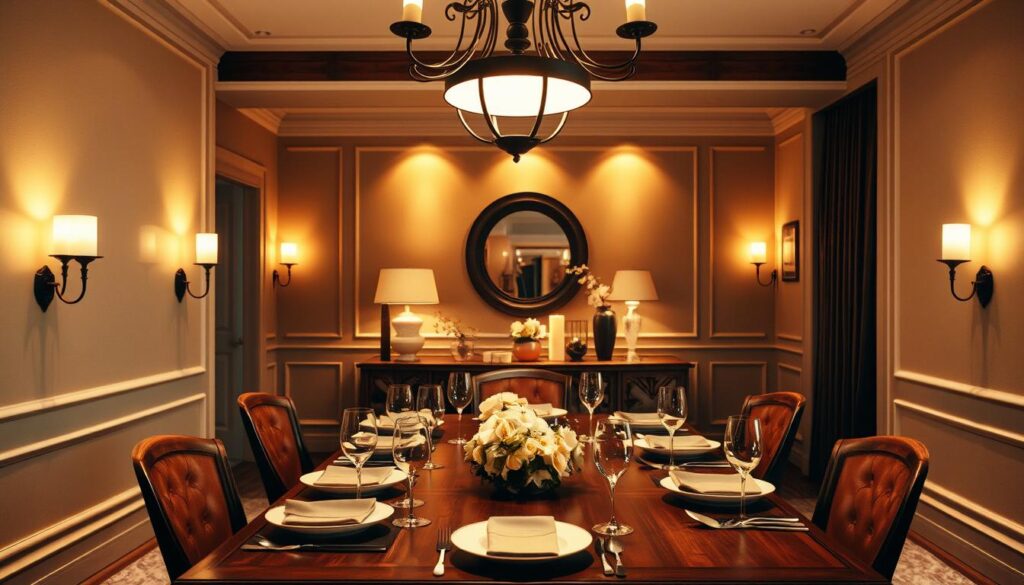
Ambient, Task, and Accent Lighting
We categorize light into three distinct functions. Ambient lighting is the foundation, providing general illumination. It fills the room with a soft, welcoming glow. This is usually achieved through ceiling-mounted fixtures or recessed lights.
Task lighting focuses on the dining table for functionality. Accent lighting highlights architectural features, artwork, or decorative elements. When these layers work together, your dining room lighting becomes both practical and aesthetically pleasing.
Designing a Lighting Plan
Designing a comprehensive plan starts with identifying your focal point, which is usually the dining table. We recommend mapping out your room to ensure even light distribution. Using dimmers allows you to transition from a bright space to an intimate setting for dinner parties.
Consider the following breakdown to help you organize your dining room lighting strategy effectively:
| Lighting Type | Primary Purpose | Common Fixtures |
|---|---|---|
| Ambient | General visibility | Chandeliers, Recessed |
| Task | Focused activity | Pendants, Linear bars |
| Accent | Visual interest | Wall sconces, Spotlights |
A well-planned layout allows you to control the mood of the room with precision. We encourage you to experiment with different combinations to find the perfect balance for your home. Proper dining room lighting is the key to making your space feel complete and professional.
Height and Placement of Fixtures
The secret to a professional-looking dining space often lies in the precise height and placement of your lighting. When you install a new dining room chandelier, you must consider how it interacts with the rest of the furniture. Proper positioning ensures that your space feels balanced and welcoming for every guest.
Ideal Fixture Height Above the Table
We recommend that the lowest point of your fixture hangs between 30 and 36 inches above the table surface. This specific range is critical because it prevents the light from obstructing the view of people sitting across from each other. If you choose dining room pendant lights, maintaining this distance helps create an intimate atmosphere without creating a visual barrier.
If your ceilings are exceptionally high, you might consider adding a few extra inches to this measurement. But, keeping the fixture within the standard range ensures that the light remains focused on the table. This placement creates a cohesive look that draws the eye toward the center of the room.
Arranging Lighting for Balance
Achieving visual harmony requires more than just vertical height; you must also focus on lateral alignment. A dining room chandelier should always be centered directly over the middle of your table to maintain symmetry. If your table is long, you may need to use multiple fixtures to ensure even light distribution across the entire surface.
When installing dining room pendant lights, ensure they are spaced evenly to avoid a cluttered appearance. We suggest measuring the distance from the walls to the fixture to guarantee it is perfectly centered. This attention to detail prevents common mistakes that can undermine the functionality of your lighting setup.
| Table Length | Fixture Type | Recommended Height | Spacing |
|---|---|---|---|
| Under 6 feet | Single Chandelier | 30-32 inches | Centered |
| 6 to 8 feet | Linear Pendant | 32-34 inches | Evenly Spaced |
| Over 8 feet | Multi-Light Setup | 34-36 inches | Balanced Symmetry |
Incorporating Smart Lighting Solutions
Smart lighting brings a new level of convenience to homeowners. It lets us change our home’s mood with just a touch or voice command. This is thanks to modern technology.
Benefits of Smart Lighting
Smart systems let us set the perfect mood for any time. Dimmers are absolutely essential in a dining room. They help change from a bright lunch to a soft dinner.
These systems also save energy. By setting lights to turn off or adjust brightness, we use less power. This keeps our space inviting and functional all day.
Popular Smart Lighting Brands
Many top brands offer reliable smart lighting solutions. It’s worth checking out these brands to find the perfect fit for your home:
- Philips Hue: Known for its wide color range and reliable system.
- LIFX: Provides bright colors without needing a separate hub.
- Lutron: The top choice for high-quality smart dimmers and control.
Choosing the right tech depends on your needs for automation and integration. The table below compares key features of these brands. It helps you pick the best system for your dining room ceiling lights.
| Brand | Primary Strength | Hub Required | Best For |
|---|---|---|---|
| Philips Hue | Color Accuracy | Yes | Full Home Integration |
| LIFX | Brightness | No | Simple Setup |
| Lutron | Dimming Precision | Yes | Professional Control |
Accessories to Complement Your Lighting
We think the right accessories can turn a simple dining area into a work of art. Your main light is the star, but the extras add depth and polish. Adding these small touches is a great way to enhance your home’s mood.
Lamps and Shades
Sideboard lamps frame your dining area and add a cozy glow. Placing them on a buffet or console table creates a layered look. This soft light is perfect for evening meals.
Choosing the right shade is key for your dining room lighting ideas. Shades made of fabric, like linen or silk, soften the light. This makes your space feel warm and inviting, not cold.
Decorative Bulbs
Today’s bulbs are both stylish and efficient. Decorative bulbs, like vintage Edison filaments, are pieces of art. They add a nostalgic charm and warm light for a cozy dining atmosphere.
When picking bulbs, think about their shape and how they’ll look in your fixture. Clear glass or unique shapes can be a focal point, making your lighting stand out.
| Accessory Type | Primary Benefit | Best Usage |
|---|---|---|
| Sideboard Lamps | Adds depth and warmth | Buffets and consoles |
| Fabric Shades | Softens light diffusion | Table lamps and pendants |
| Edison Bulbs | Visual aesthetic appeal | Exposed bulb fixtures |
| Dimmer Switches | Total control of mood | All lighting zones |
The success of your design comes from these thoughtful additions. Balancing your main light with these accessories creates a welcoming space. We suggest trying out these dining room lighting ideas to find the perfect fit for your home.
Maintaining Your Dining Room Lighting
Regular maintenance is key to keeping your dining room light fixtures elegant. Caring for your hardware makes your space a beautiful centerpiece for meals. It also protects your investment, making your fixtures shine for years.
The placement of your lighting is as important as its cleanliness. Make sure it’s perfectly centered over the table for balance. For inspiration, check out dining room lighting ideas to see how styles last.
Cleaning Tips for Fixtures
Dust and grime can dull even the most expensive fixtures. For glass, use a soft cloth and mild glass cleaner to avoid streaks. Metal frames need a dry microfiber cloth to remove fingerprints and debris.
- Avoid harsh chemicals that might strip protective coatings.
- Use a soft brush for intricate details on chandeliers.
- Always turn off the power before cleaning.
Updating Bulbs for Efficiency
Switching to LED bulbs is smart for energy savings. LEDs use less power and provide a consistent glow. This change cuts down on utility costs and bulb replacements.
| Fixture Material | Cleaning Frequency | Recommended Tool |
|---|---|---|
| Polished Metal | Monthly | Microfiber Cloth |
| Clear Glass | Bi-Weekly | Glass Cleaner |
| Fabric Shades | Quarterly | Soft Bristle Brush |
| Crystal Elements | Semi-Annually | Specialized Spray |
By following this maintenance schedule, your dining room light fixtures stay in top shape. Regular care keeps your home looking great and ensures your lighting works perfectly at dinner parties.
Final Thoughts on Dining Room Lighting
Choosing the right lighting is key. It’s about finding a balance between looks and function. Your home should make every meal feel special.
Good lighting is the heart of your home’s design. It connects beauty with practical needs.
Personalizing Your Environment
Choose fixtures that show off your style and fit your space. Brands like Visual Comfort and Hubbardton Forge have many options.
Spending time on your lighting plan makes a big difference. Try out different layers to see what works for you.
When you find the right lighting, your space will feel complete. We hope this guide helps you create a warm and inviting place for everyone.